

A Singaporean Beer, Brewed Abroad
Singapore's most iconic F&B names were built here. Increasingly, they are made somewhere else.


📌 Table Stakes examines the broad market trends shaping Southeast Asia's F&B scene. Sometime in 2027, a can of Tiger Beer will arrive at a hawker centre in Singapore. The gold will look the same, the roaring mascot unchanged, the lager cold and recognisable. The liquid inside will have been brewed in Malaysia or Vietnam, following Asia Pacific Breweries Singapore’s announcement on March 24 that it would phase out large-scale brewing at its Tuas facility by end-2027. Tiger Beer has been produced in Singapore since 1932, when it debuted as the country’s first locally brewed lager. After 95 years, production is shifting to regional breweries across the Causeway and further north.

Seven days after the Tiger announcement, Yeo Hiap Seng announced 25 retrenchments at its Senoko facility, consolidating can manufacturing to Malaysia. Two of Singapore’s most recognisable F&B names moved operations across the same border in the same news cycle, and both announcements were covered as separate stories. The connection between them received little attention.
What the economics have always said
Heineken’s managing director Kenneth Choo was candid about what drove the Tuas decision. He told the Straits Times that the company had been “at a cost disadvantage in Singapore for some time” and needed to “play catch-up with other importers,” noting that about half of all beer consumed in Singapore is already imported from lower-cost markets like China and Malaysia. The Tuas plant’s ageing equipment would cost as much to replace as building a new facility elsewhere in the region, making the case for staying difficult to justify on the numbers alone.
The cost pressures Choo described are not unique to brewing. Land in Singapore is expensive and finite, industrial leases are competitive, and labour costs have risen consistently alongside the broader cost of living. For manufacturers producing commodity or near-commodity food and beverage products, where margins are thin and volume is the primary lever for profitability, Singapore’s cost base has become increasingly difficult to absorb. The economics that once made local production logical - proximity to the domestic market, lower logistics costs, the practical advantages of making something close to where it is consumed - have eroded as regional supply chains matured and cross-border logistics became cheaper and more reliable.
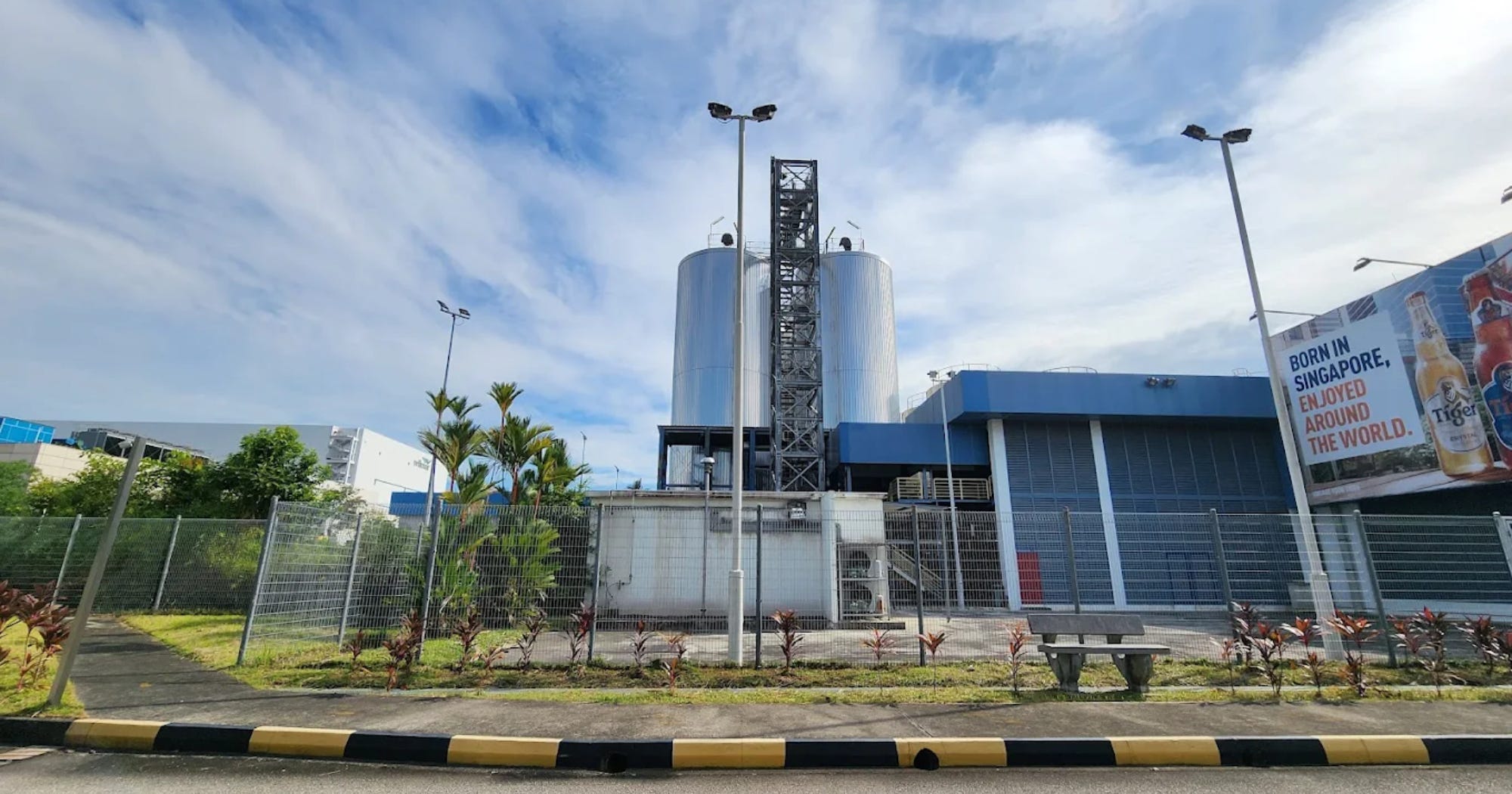
What makes the Tiger case instructive is how long the company held on before making the move. The Tuas facility had been operating for nearly a century, and the decision to wind it down came only after the gap between Singapore’s cost structure and the rest of the region had widened to the point where the investment required to modernise the plant could not be justified against the savings available by moving production across the border. That timeline suggests the decision was not taken lightly, and also that the structural forces behind it had been building for far longer than the announcement implied.
Tiger is not a special case so much as the most visible recent example of a pattern that has been developing quietly for decades. Yeo’s built its first Malaysian factory in Johor Baru in 1971, responding to policy that encouraged domestic production across the border, and the centre of gravity for its manufacturing shifted to Malaysia gradually over the years that followed. Today, Yeo’s Malaysia serves as the primary production hub for the brand’s global distribution, supplying markets from Indonesia to Australia to Europe and the United States. The Senoko retrenchment last week fits within that longer trajectory rather than representing a sudden change in direction.
The restaurant version of the same story
The same dynamic shows up differently in the restaurant and cafe segment, where the constraint is not manufacturing cost but the economics of operating physical space. Sarnies, the homegrown cafe brand that built its identity in Singapore, now operates two outlets here and eight across Bangkok, where it has also launched a cocktail bar, a Latin American restaurant, and a salad concept. The brand was established and validated in Singapore. The business found room to grow in a market where rents are lower, commercial space is more available, and the margin structure allows for the kind of experimentation that is increasingly difficult to sustain here.
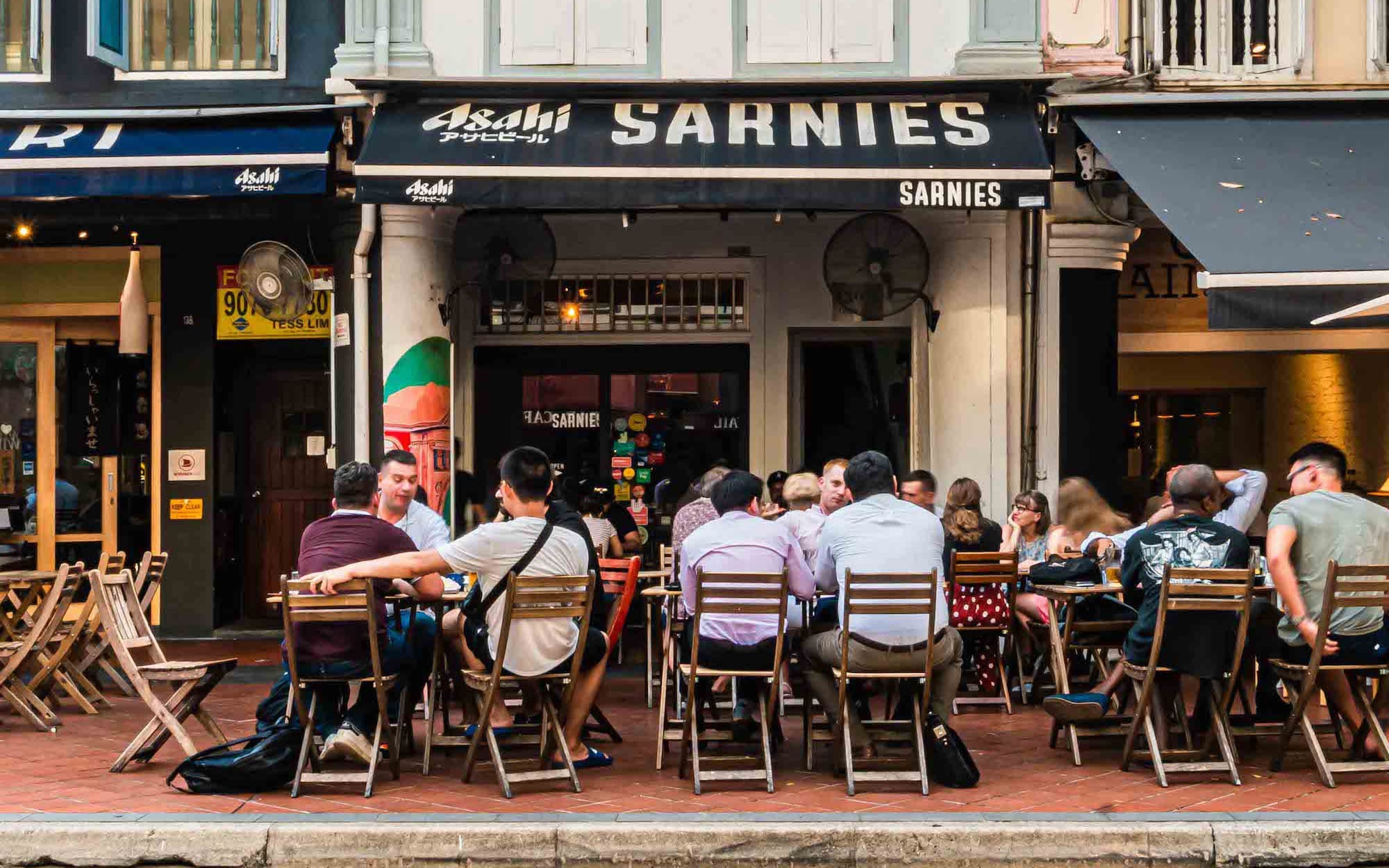
The structural pressures behind that decision are well-documented. Rising rents forced the closure of 3,000 F&B businesses in Singapore in 2024, the highest number since 2005, and the trend has continued into 2025 with monthly closures averaging 254 establishments. The lease renewal cycle is a particular point of vulnerability for operators who have invested years in building a customer base at a specific location, only to face rent increases of 10 to 30 percent or more when their term ends. For businesses already operating on margins of five to seven percent, those adjustments can be enough to make continued operation unviable regardless of how well the food is received.
What makes the restaurant version of this story different from the manufacturing one is that the exit is rarely framed as a structural response to Singapore’s cost environment. When a brand expands aggressively in Bangkok or Kuala Lumpur while maintaining a minimal footprint at home, it tends to be presented as international ambition rather than domestic constraint. The two are not mutually exclusive, but the emphasis on opportunity abroad often obscures the degree to which difficulty at home is part of the same calculation.
What Singapore does, and what it doesn’t
What Singapore does well is distinct from what it has become too expensive to do here, and the Tiger case makes that distinction unusually visible. More than 95% of Tiger’s volume is already sold outside Singapore across more than 60 markets, meaning the domestic market has long been a marginal contributor to the brand’s commercial performance. What Singapore provides is something different: a base of operations for the people making decisions about how the brand is positioned, how it is marketed, and where it goes next. Heineken described this explicitly in its announcement, noting that Tiger Beer would continue to be “built and shaped” in Singapore as it grows its presence worldwide.
That role - brand stewardship, strategic direction, creative leadership - is one Singapore is well-positioned to hold. Its workforce is educated, English-speaking, and internationally oriented. Its position at the intersection of Southeast Asia’s major markets makes it a practical base for regional management. And the credibility that comes with having built a brand here, tested against a demanding and food-literate consumer population, carries genuine weight when that brand enters other markets. These are real advantages, and they explain why companies like Heineken continue to invest in Singapore-based capabilities even as they shift production elsewhere.
But the advantages that make Singapore a good place to manage a brand are different in kind from the advantages that once made it a good place to make things. As the region’s manufacturing infrastructure has developed and logistics networks have matured, the practical case for producing food and beverage goods in one of the world’s most expensive cities has become harder to make, particularly for products where the margin for cost savings is narrow and the consumer is unlikely to notice or care where the item was produced. The result is a growing divergence between where Singapore F&B brands are headquartered and where their products are actually made.
A designation of origin
Tiger began in 1932 as a practical response to geography. A locally brewed lager was cheaper, fresher, and more reliable than imported European beer for a trading port in the tropics, and the brand’s early success was built on that straightforward advantage. The origin and the product were the same thing. The beer was Singaporean because it was made here, and it was made here because making it here made sense.
Nearly a century later, both of those conditions have changed. Tiger has grown large enough that its Singaporean origin story travels with it into more than 60 markets regardless of where the liquid is produced, and the cost structure that once made local brewing the obvious choice now makes it the one that is hardest to sustain. The brand’s identity has, over time, become portable in a way that the economics of its production never were. Heineken’s decision to separate the two — keeping the brand in Singapore while moving the brewing out — is in that sense a recognition of something that was already true: that what makes Tiger Singaporean is no longer primarily a question of where it is made.
Yeo’s followed a version of the same arc over a longer timeline, with manufacturing gravitating toward Malaysia well before last week’s announcement formalised the latest shift at Senoko. Both brands remain Singaporean in the ways that are most legible to the world — in how they present themselves, in where their strategic decisions are made, in the origin stories they carry into international markets. What has changed, for both, is that the physical work of making their products has gradually moved to places where that work is cheaper to do, and the brands have remained intact through the transition. That pattern is likely to continue, and it raises a question worth sitting with: as more of Singapore’s most recognised F&B names shift operations elsewhere while retaining their Singapore identity, what exactly does it mean to call something a Singapore brand?