

Burnt Ends: How Kuro Kare ran into a price ceiling it couldn't clear
How a $3.20 price ceiling and four months of semester breaks ended Kuro Kare's NUS chapter.


📌 Burnt Ends is a series that turns F&B operator mistakes into learning lessons.When Aidan Wee and Ho Bing Ru founded Kuro Kare in mid-2023, their plan was to bring the standards of fine-dining technique to Japanese curry at a price that didn’t require a fine-dining budget. Both had come out of Fleurette, the intimate counter-dining restaurant on Rangoon Road, where Low had been a co-founder and Bing Ru had run the kitchen.
Their centrepiece was a 36-hour Japanese curry built from more than 25 ingredients, a long-cooked broth with imported Japanese proteins broken down in-house from scratch. The name translates to “black curry,” and the long cooking time behind it was the key differentiator. Quality at an accessible price was the whole proposition.
When a stall came up at NUS Techno Edge in August 2023, the case for it seemed reasonable: Kuro Kare could tap on a large student population, consistent canteen footfall, and present itself as a concept offering something genuinely different from the stalls around it. What Low and Bing Ru couldn’t fully see from the outside was how tightly constrained price expectations were among the people they’d be cooking for.
What Kuro Kare got right
Operationally, the stall ran well. At peak, the kitchen could turn 50 to 60 customers an hour over a sustained 90-minute window, batching orders in groups of six every ten minutes, with no meaningful bottlenecks in the workflow. Food costs were held between 25 and 30 per cent, which sits within the range Singapore operators broadly consider workable for a quality-focused concept, and the curry fried chicken, which came to account for more than half of all items sold, performed well on both volume and margin.
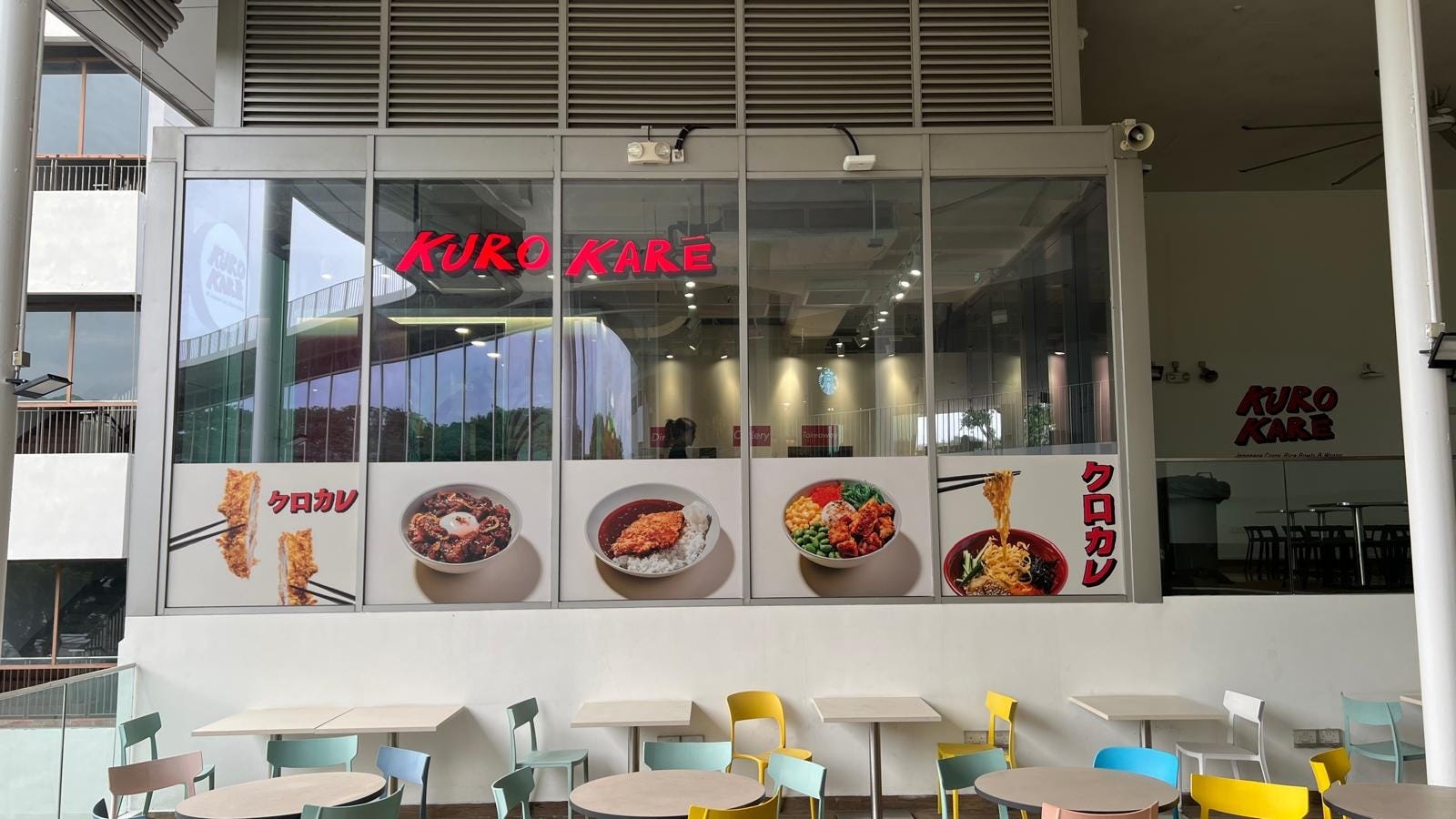
The customers who enjoyed the curry tended to return, and Low’s read was that the loyalty among those diners was genuine. When concerns about portion size surfaced, the team responded: rice portions were increased by 75 per cent and free refills were added.
These adjustments, though, were working against a more fundamental problem at the location.
What didn’t work
NUS Techno Edge operates with the economic logic of a hawker centre, and the students eating there applied hawker centre benchmarks to everything inside it. Economy rice - a standard set of rice, one meat, and one vegetable - was available in the same building for $3.20, and that anchored diners’ sense of what any given meal was worth paying. Kuro Kare had expected to sell in the $6 to $10 range, the minimum at which imported proteins, in-house preparation, and a 36-hour cook could be justified. The price ceiling that the market actually imposed sat between $3 and $5, and larger portions and free rice refills couldn’t close a gap of that size.
Low described the bind directly: “People don’t understand why our chicken costs more than the processed chicken chop from downstairs. Chicken is chicken to them.”
Part of what made this so difficult to change was that Kuro Kare had no real way of showing customers why the food cost what it did. Ingredient provenance was noted in menu descriptions early on, but customers didn’t read them. Low drew a comparison that was honest about why this was the case: expecting a diner unfamiliar with Japanese ingredient sourcing to pay more for it was roughly like presenting someone who doesn’t follow finance with two stocks and expecting them to know which one was worth more. The information was there, but the context to act on it wasn’t. Cheaper items sold in higher volumes, and as they came to dominate the mix, the margin on each order shrank even as the kitchen got busier.
What really put the lights out
The margin pressure was only part of the problem. Traffic at Techno Edge turned out to be more volatile than the initial assessment had suggested, shaped by blended learning schedules and hybrid attendance patterns that made student volumes intermittent and hard to anticipate. Additionally, dinner service after 5pm yielded almost nothing.
As Aidan points out, a small operator evaluating a new site doesn’t realistically have the capacity to station someone there across multiple lunchtimes over several weeks to build a reliable picture, and the volatility only became apparent once Kuro Kare was already committed.
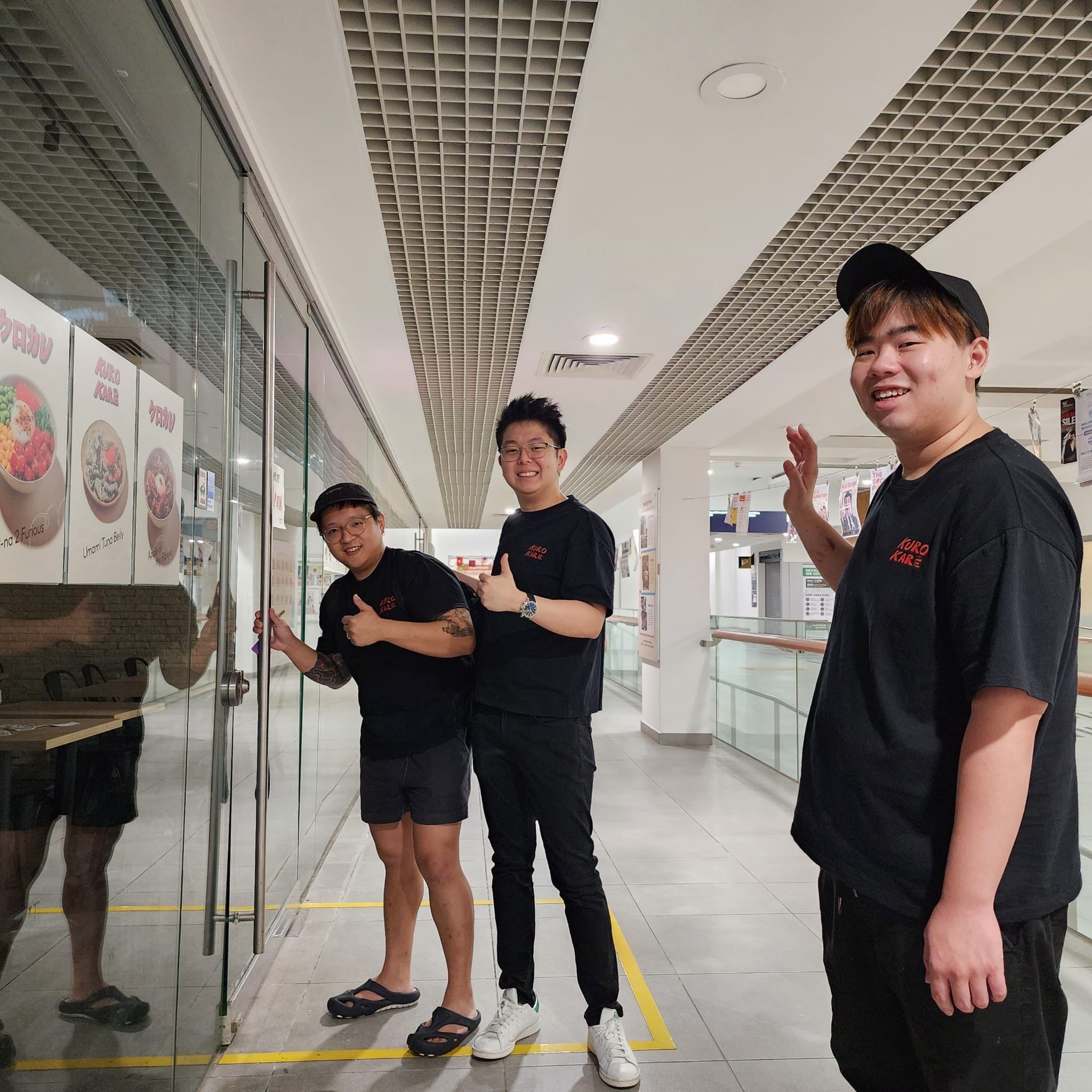
The more serious structural problem was the semester calendar. When December arrived and the term ended, revenue dropped to zero for an entire month while fixed costs continued accumulating, and the cycle repeated at every subsequent break. Four months in each year, the stall was running obligations against near-zero income, and closing during those periods wasn’t a genuine option since staff had ongoing salary commitments and the kitchen equipment had nowhere else to go. Low describes the first summer break as the moment the decision became clear. “Four months out of the year, you’re losing money,” he said. “You just know it’s time to get out.”
What Low would have done differently
Given everything, Low’s honest answer is that he wouldn’t have opened at NUS at all. Asked what he’d have changed if he’d had no choice but to take the stall, he described a complete overhaul: building the menu around batch-cooked fried rice and noodles with frozen proteins, keeping preparation minimal and staffing to part-timers only, the kind of operation that could realistically turn a profit at $3 to $5 per meal. It would have meant setting aside the 36-hour curry and everything the concept had been built around, and Low was direct that he wasn’t been prepared to do that. “Super down market,” was how he put it. “Frozen chicken karaage, fried rice, that’s it. No need to try to be smart.”
The NUS outlet has since closed, and Kuro Kare continues to operate out of its original SMU location, where foot traffic from the surrounding precinct and a different customer profile have proven a better fit for what the concept is actually trying to do.
Was a regular when I was at SMU. Didn’t know they had an NUS outlet!