

Burnt Ends: How Shaker Lakers’ unfair advantage became its fatal flaw
When COVID-era supplier deals disappeared and margins evaporated, even a hero product couldn't save this burger stall.


📌 Burnt Ends is a series that turns F&B operator mistakes into learning lessons.When Shaker Lakers first opened at Yishun Park Hawker Centre in 2019, they had a compelling proposition: restaurant-quality burgers at hawker-friendly prices.
The duo behind it, Michael Quinn and Gillian Pua, had met while working at Marche Singapore at VivoCity. Michael, an Irish chef with 14 years of experience in New York City, and Gillian, a Singaporean, brought more than culinary skills to the venture. They brought supplier relationships developed during their time at Marche, including connections to suppliers like Meat Co. that serviced reputable restaurants.
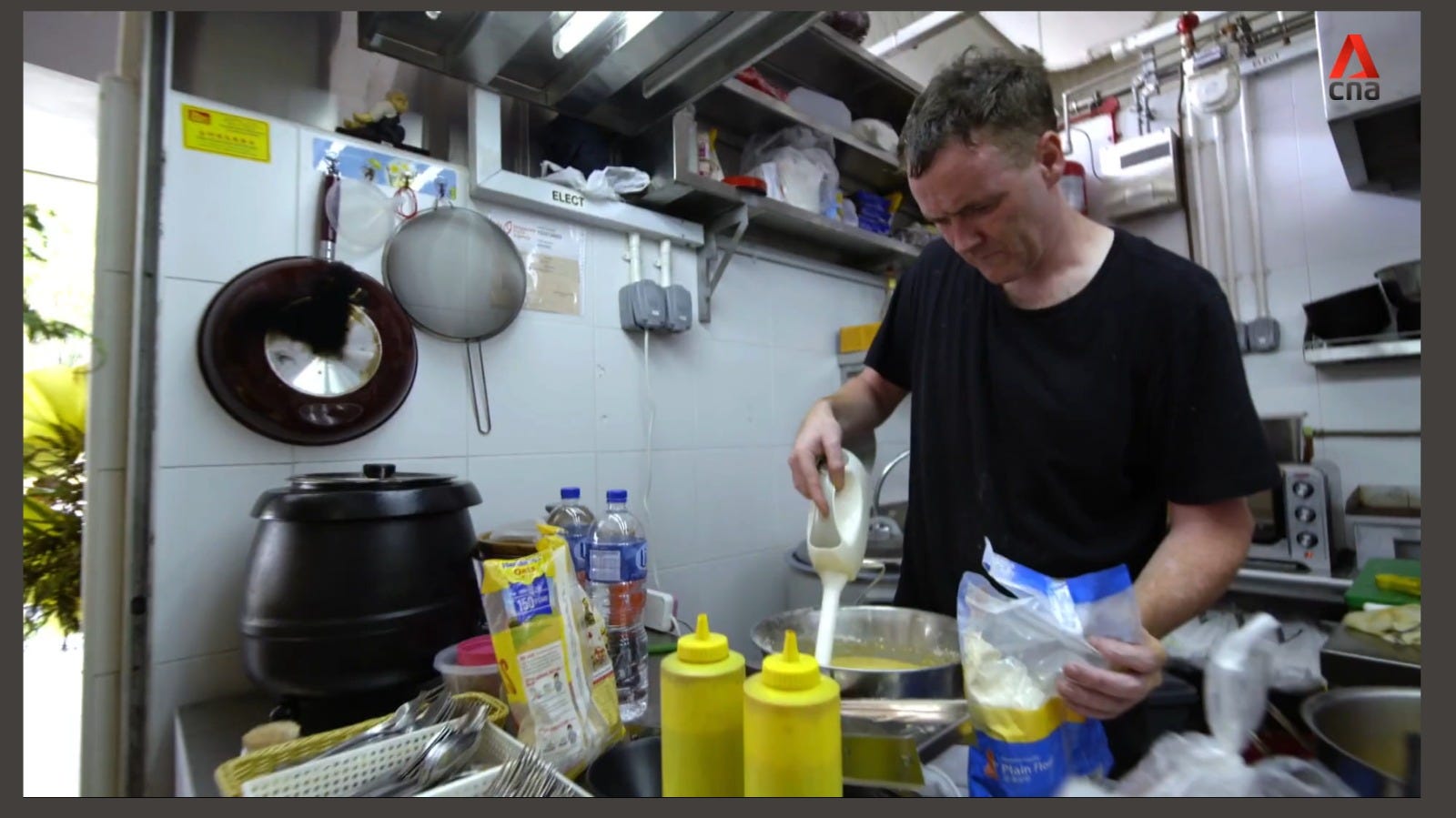
For 4 years, it worked. Those supplier connections and temporary COVID-era pricing allowed them to serve premium ingredients while keeping costs manageable, and customers responded enthusiastically.
But the economics were built on foundations they couldn’t control. When supplier pricing normalized and input costs climbed, the margins disappeared. Add in a harsh physical environment, operational complexity, and a second venue at the Airbus Training Center that couldn’t compensate for mounting pressures, and the fragility became undeniable.
This is the story of what happens when a business model depends on temporary advantages that can’t be sustained once market conditions shift.
What Shaker Lakers got right
Shaker Lakers understood their value proposition from day one: restaurant-quality food at a highly affordable rate. During COVID, this positioning became their identity, backed by the supplier relationships that allowed them to access premium ingredients at manageable costs. The temporary pricing window during COVID made this economically viable in ways it wouldn’t be later.
Their menu focus was customer-driven. When burgers clearly emerged as the hero product, the item people came for and talked about, they tightened the menu around burgers and pasta, cutting tedious items that didn’t move. Gilian recalls the turning point: “It was [when customers kept coming for burgers] that actually made us realize how much everybody loves a burger. Let’s change.” They had started with a full menu, but “burgers really took off, and that really made us famous,” Michael recalled.
The hawker stall model itself was a smart entry strategy. Compared to renting a full restaurant space, the stall represented a lower-risk way to test the concept and build a following without overcommitting capital upfront.
Beyond the food, Shaker Lakers built something harder to quantify: genuine community connections. Michael remembers one of the unexpected highlights: “Seeing these kids for six, seven years from starting, suddenly they’re in secondary school. They’re bigger than you... It’s quite good to be remembered.”
The community Shaker Lakers built hasn’t forgotten them. In one weekend alone, three former customers texted Michael to check in on how he’s doing. It’s a reminder that Singapore’s local food scene, for all its challenges, remains a small, passionate community where people genuinely care about the operators trying to make a living.
What really put the lights out
The supplier pricing window that gave Shaker Lakers their early advantage eventually closed. The lower prices they had benefited from during COVID normalized as the market stabilized, and when the lock-in period ended, input costs rose sharply.
But customer expectations didn’t rise with them. Michael recalls the bind they found themselves in: “We as a hawker, there’s some limitations on hawker prices you can charge. We kind of had hit the limit already, and the food costs kept going up.”
When they increased prices to offset rising costs, some customers didn’t come back.
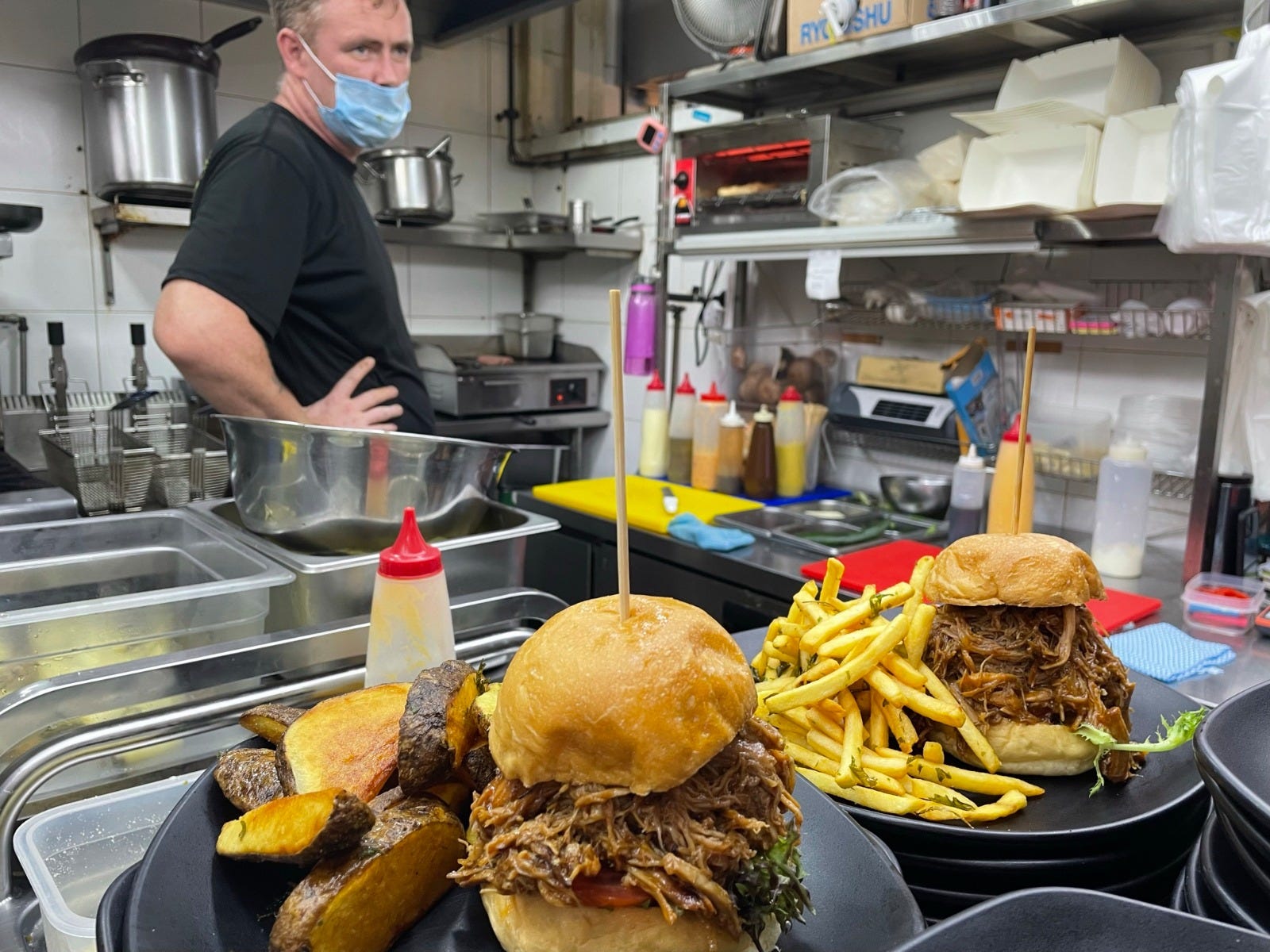
The physical environment at Yishun Park Hawker Centre became a sustainability problem. The heat and smoke weren’t just uncomfortable for customers, they took a toll on the operators themselves. Michael developed arthritis in his knees from standing all day, and his feet also became swollen from the constant grind. “Some of our customers also preferred to do takeaway because they found the environment too smoky,” he explained.
For Gilian, experiencing the conditions firsthand only convinced her to wind down operations at Yishun Park Hawker Center. After running the stall herself for three days when Michael was away, she made up her mind: “That was the key killer. The environmental issues. After the third day, that’s it. I decided to go. If I can’t take it, I don’t see how [Michael] can take it.”
The operating environment was complicated by Yishun Park’s management structure. Run by Timbre Group under Singapore’s Socially-conscious Enterprise Hawker Centre model, the venue became the subject of controversy in 2025 when food critic KF Seetoh publicly criticized what he described as exploitative contract terms. Hawkers reportedly paid 15% of gross turnover (capped at $2,550 monthly), plus mandatory fees for gas, POS systems, and vector control. Seetoh claimed gas prices ran up to 50% higher than NEA-managed centres, and alleged that an 18-point penalty system imposed $100 fines for infractions ranging from refusing the loyalty app to discussing internal matters publicly. Surveillance cameras were installed in individual stalls.
While Timbre defended its model as risk-sharing that protected hawkers during lean periods, the controversy highlighted the challenging operating environment many vendors faced.
Even when demand was strong, operational ceilings constrained their ability to scale. The stall footprint, storage limits, and workflow bottlenecks meant they couldn’t simply ramp up volume to compensate for shrinking margins. “The busier you get, you need more staff. You need more storage. But you cannot put more than three people. There’s nowhere to put,” Michael explained.
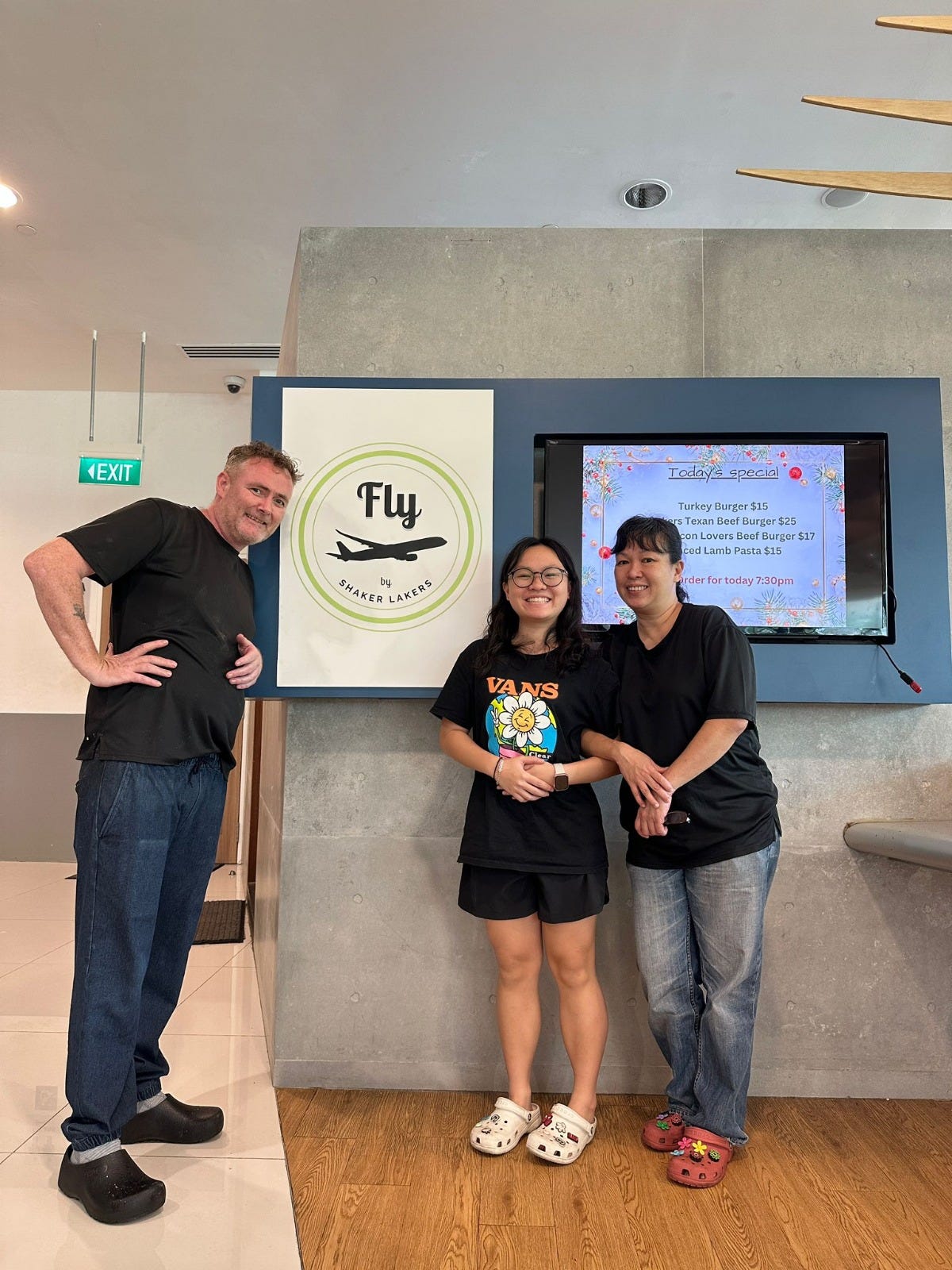
The second venue at Airbus Training Center introduced a different kind of fragility. The first year benefited from strong internal support and steady customer flows, but when management changed and those flows shifted, the second year became a struggle. Halal-only restrictions also meant that pork was off the menu - a hard constraint that meant that the duo could not serve their bestsellers. What had seemed like a stable restart gradually turned into another source of strain.
What they would have done differently
Today, Michael has come full circle. He’s now at Meat Co. Paragon, the same supplier that helped make Shaker Lakers possible. “It’s a chef’s dream to have so many items to play with, and it’s also a foodie paradise,” he reflected. The grab-and-go farm-to-table destination is a space he believes is worth watching - and a must-visit for food enthusiasts.
Looking back, Michael believes that tighter costing discipline earlier would have helped. He acknowledged they should have been more careful from the start: “I will be very, very careful about sourcing ingredients, really looking into every [detail]... sometimes you start to sit down and look and it’s costing so much every month.”
They also recognized that health and stamina needed to be part of the business model from the beginning. “At the end of the day you can cook for passion. Everything is quite fun, fantastic. But I also think you must take care of yourself,” Michael reflected. The physical toll of operating in a hot, smoky environment wasn’t just a minor inconvenience - it became a sustainability issue that affected their ability to keep going long-term.
On the operational side, they emphasized that discipline and standards drive results, not just recipes. Gilian was clear about this: “People think that just by looking at [Michael], I can be a good chef. But how much of a chef are you? I can give you a recipe, but [can you make it in the kitchen]?” She learned firsthand that execution under pressure requires more than knowing the steps: how Michael would time her cooking, and call her out whenever she was close to overcooking them. The relentless attention to detail and speed, while grueling, was what separated acceptable from excellent.
Finally, there was the question of exit timing. Both Gilian and Michael preferred to close while the brand was still remembered positively rather than let it fade into irrelevance or damage its reputation by limping along.
Shaker Lakers built something customers loved, but they built it on foundations they couldn’t control. When COVID-era pricing disappeared and margins collapsed, even a hero product and a loyal following weren’t enough to keep the lights on.