

Burnt Ends: How Tanuki Raw's best outlet was taken from them
How a well-run outlet at Funan was undone by the same conditions that kept it alive.


📌 Burnt Ends is a series that turns F&B operator mistakes into learning lessons.When Grafunkt exited Funan in August 2024, Tanuki Raw followed about two weeks later. Howard Lo, the Seattle-born founder of Empire Eats Group, had wanted to stay. He had been told by CapitaLand, which manages the mall, that he could stay, and for most of the final year he had been planning what staying would look like.
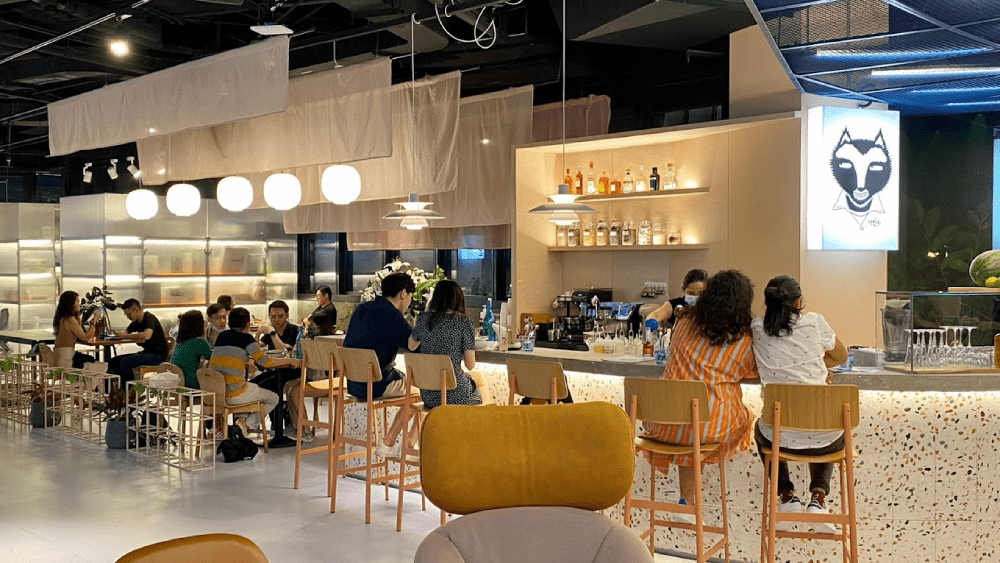
The outlet had been profitable throughout its three-plus years of operation. By Howard’s own account, it was the most laid-back of the Tanuki Raw outlets he was running at the time, and the one he felt still had room to grow. Here’s how it was built, and what ended it.
What worked well
By 2021, Howard had spent more than a decade building and running F&B concepts in Singapore, among them Standing Sushi Bar, The Secret Mermaid, and Tanuki Raw itself, which had opened at Orchard Central in 2012. The Funan opportunity came through a relationship he already trusted. He had known Grafunkt’s co-founders Nathan Yong and Jeffrey Kurniadidjaja since at least 2012, when Tanuki Raw sourced furniture from their Park Mall store, and the two parties had stayed in contact since. The introduction to Funan came through a former Tanuki Raw manager who had since moved to Grafunkt and was running its in-house F&B operation, a role that Grafunkt, having found restaurant operations harder than expected, was ready to hand off.
It wasn’t the first time Howard had tried something like this. Since 2016, Tanuki Raw had been running the F&B at Kapok’s National Design Centre outlet, sharing space with a lifestyle retailer while Kapok focused on its clothing and accessories. Howard describes that collaboration as having a good mix of crowds coming through: Kapok’s own customers, tourists visiting the National Design Centre, and Tanuki Raw’s regulars. Funan, he thought, could deliver something similar.
Funan had reopened in 2019 after a full renovation, and Howard saw the location as a genuine draw. It was right next to Wild Rice, the renovated mall had an interesting identity, and the Grafunkt space on the 4th floor was 13,000 sq ft of one of Singapore’s better-known design retailers. The courts and law firms of the City Hall area were nearby, and Tanuki Raw’s core crowd at the time skewed late twenties to mid-thirties, so Howard saw an opportunity to reach an older demographic: the Wild Rice season pass holder who tended to be older, the Grafunkt customer who could afford high-end furniture, the lawyers and office workers from the surrounding area. He says the thesis held up. The City Hall crowd came, and business was noticeably stronger when Wild Rice had shows running.
What didn’t work
The relationship with Grafunkt was good, but it didn’t drive as much business as Howard had hoped. Jeffrey explained to Howard that a customer buying from Grafunkt might visit the store several times before committing to a purchase, which meant Grafunkt wasn’t the kind of business that brought a steady stream of people through the door. The customers who came specifically to shop at Grafunkt and then ate at Tanuki Raw were not, Howard says, a large part of the business. On top of that, operating within a retail space imposed constraints on the menu: Howard says the team had to be careful about what they were offering, since they couldn’t have very smoky or strong-smelling dishes, given that people browsing the furniture wouldn’t want to be affected.
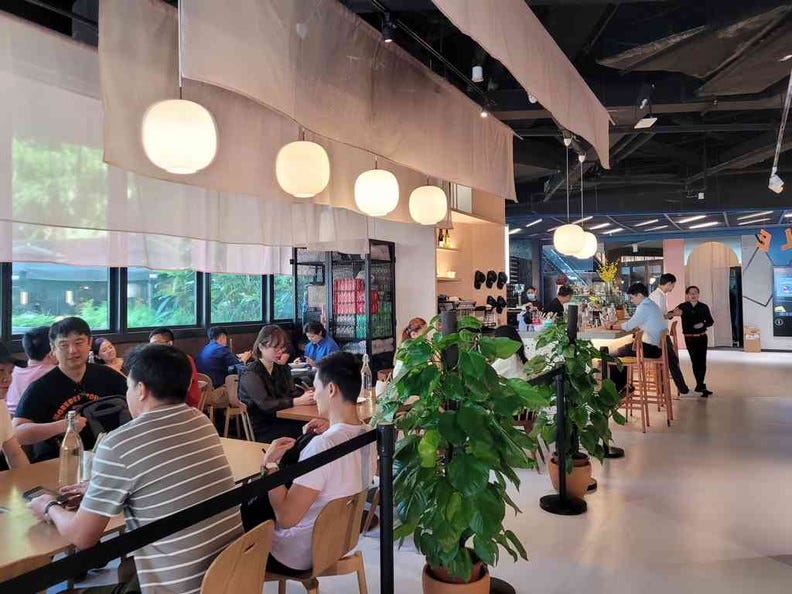
The 4th floor itself compounded the outlet’s troubles. Most of Funan’s visitors concentrated on the lower floors, with the main cluster of restaurants sitting on level 2 and most of the mall’s foot traffic staying there. Tanuki Raw shared the 4th floor with Godmama and a bakery, and all three had to draw their own customers up rather than catching anyone in passing. Howard notes that the bakery was the likeliest of the three to benefit from someone walking by and deciding to stop.
Which brought everything back to Wild Rice. When Wild Rice had shows on, business was a lot stronger, but Howard recalls a stretch in 2023 where the theatre had very few shows running across the year, and that noticeably affected the Funan outlet. He had been watching Wild Rice’s forward schedule as part of how he thought about the outlet’s prospects, which meant that in practice, how well the Funan outlet did in any given period depended partly on what a theatre company had decided to programme.
What Howard would have done differently
By late 2023, Grafunkt was in negotiations with CapitaLand over a rent increase on the space. Grafunkt, which according to Howard was occupying around 13,000 sq ft on a floor that didn’t generate much walk-in traffic, couldn’t justify paying more, and they gave Howard about nine months’ notice that they might not renew.
Howard entered direct negotiations with CapitaLand to stay on even if Grafunkt left, and for several months the signals were encouraging. CapitaLand said consistently that they wanted Tanuki Raw to stay, floor plans were drawn up, and they discussed carving out Tanuki Raw’s existing space and adding around 1,000 sq ft for a cocktail bar. No agreement was ever signed.
About a month before Grafunkt’s lease was due to expire, CapitaLand told Howard that another tenant wanted to take the entire unit. Staff who had been expecting to stay needed to be moved to the group’s other outlets at short notice, and the financial impact was immediate: the Funan outlet had been one of the group’s better-performing locations and had been supporting some of the slower ones, so losing it hurt on both counts. Grafunkt exited in August 2024, and Tanuki Raw followed about two weeks later. CapitaLand didn’t respond to Commune’s request for comment.
Howard has closed outlets before. Usually it’s because a location wasn’t working, or a building was being renovated and he got pushed out. The Funan closure was different. “This one was a lot more bittersweet,” he says. “It just lingers more.” Unlike most closures, there was no relief in it: the outlet had been performing well, he had plans to grow it, and he thought he was staying. If he goes back to the CBD, he says it’d have to be somewhere with genuinely high foot traffic, like a ground floor location at Raffles City, rather than a spot that requires customers to make a deliberate trip up. He wouldn’t rush back to Funan.