

For Mervyn Chua, the kitchen was always the easy part
The founder of Mervyn's Madeleines on betting everything on the craft, and what Bangkok taught him about the rest.


The madeleine is a strange thing to build a reputation on. It is a French shell cake, butter-rich and delicate, the kind of thing you expect to find in a patisserie window rather than alongside squid linguine and serious pasta.
At Mervyn’s Madeleines, it sits on the menu as both a signature and a founding document, the product that started everything, still selling years later. Mervyn Chua is 27. He runs the operation mostly himself, cooks the bulk of the food, and is about to open a second outlet. The smell of the madeleine fresh from the oven, he says, still does something to him. “It’s the smell of the very first thing I ever baked,” he says. “It still feels like validation.”
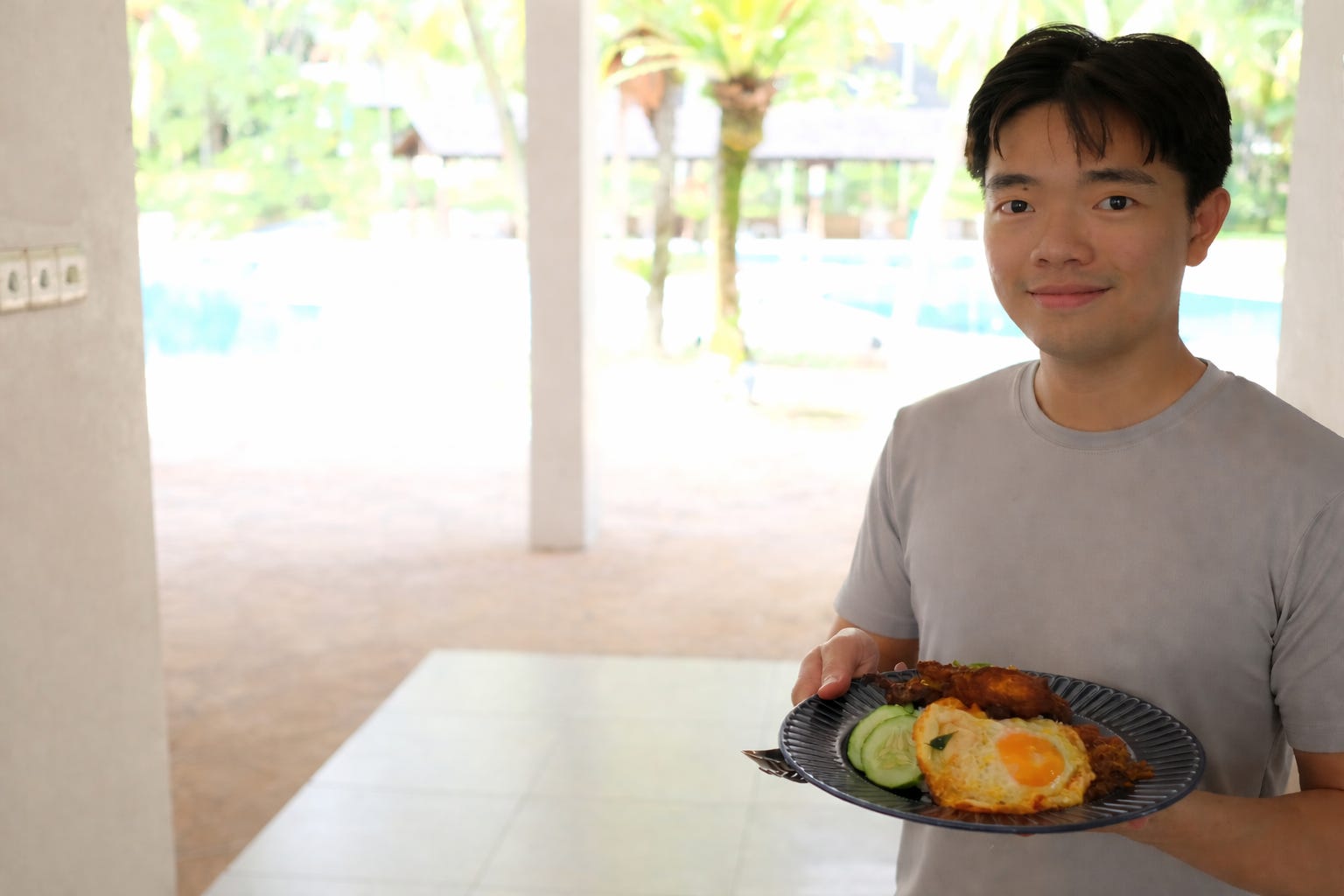
That it took a French pastry to get him here, and not a finance degree, which was the other serious option, is the part of the story worth sitting with.
His father’s path
Mervyn’s father went to Raffles Institution. He played rugby there during what Mervyn describes as the glory years, and he did well. When Mervyn sat for his PSLE, the path was already mostly laid out, and getting into RI through the through-school admission exercise felt less like a choice than a natural consequence of being the eldest son in a family where the template already existed. “I knew going there would be good,” he says. “People look upon you with respect. It goes a long way.”
The same logic ran through the rest of the family. His father retired from a Chinese bank. His mother was an accountant before she stepped back to raise the children. Both sisters went into finance. The unspoken assumption was that Mervyn would follow a similar track and build his career in something that made sense on paper.
Even then, he knew that he hated it. Numbers bored him in secondary school and he couldn’t see how spending four years in university studying them would change that. But he didn’t know what else there was, and so he kept going.
Around the same period, his squash game plateaued. Classmates who had picked up the sport after him were placing higher. His grades moved in the same direction. What he can say is that for the next few years he was going through the motions on a track that had stopped making sense, trying harder without anything shifting, waiting for a silver lining that didn’t arrive.
The switch
Mervyn was 18 and sitting his A levels when Gordon Ramsay opened his first restaurant in Singapore at Marina Bay Sands.
His classmates were talking about it, and Mervyn watched the YouTube videos. He kept watching. For the first time in years he could sit still for hours - a sharp contrast to the restlessness that made studying feel like a physical ordeal.
He started cooking with his grandmother at night after school, working through simple dishes and feeling a pull he had never felt before in any area of study. He started watching Jamie Oliver too, and realised that Ramsay wasn’t an exception, but a way into an entire industry he simply had never been made aware of.
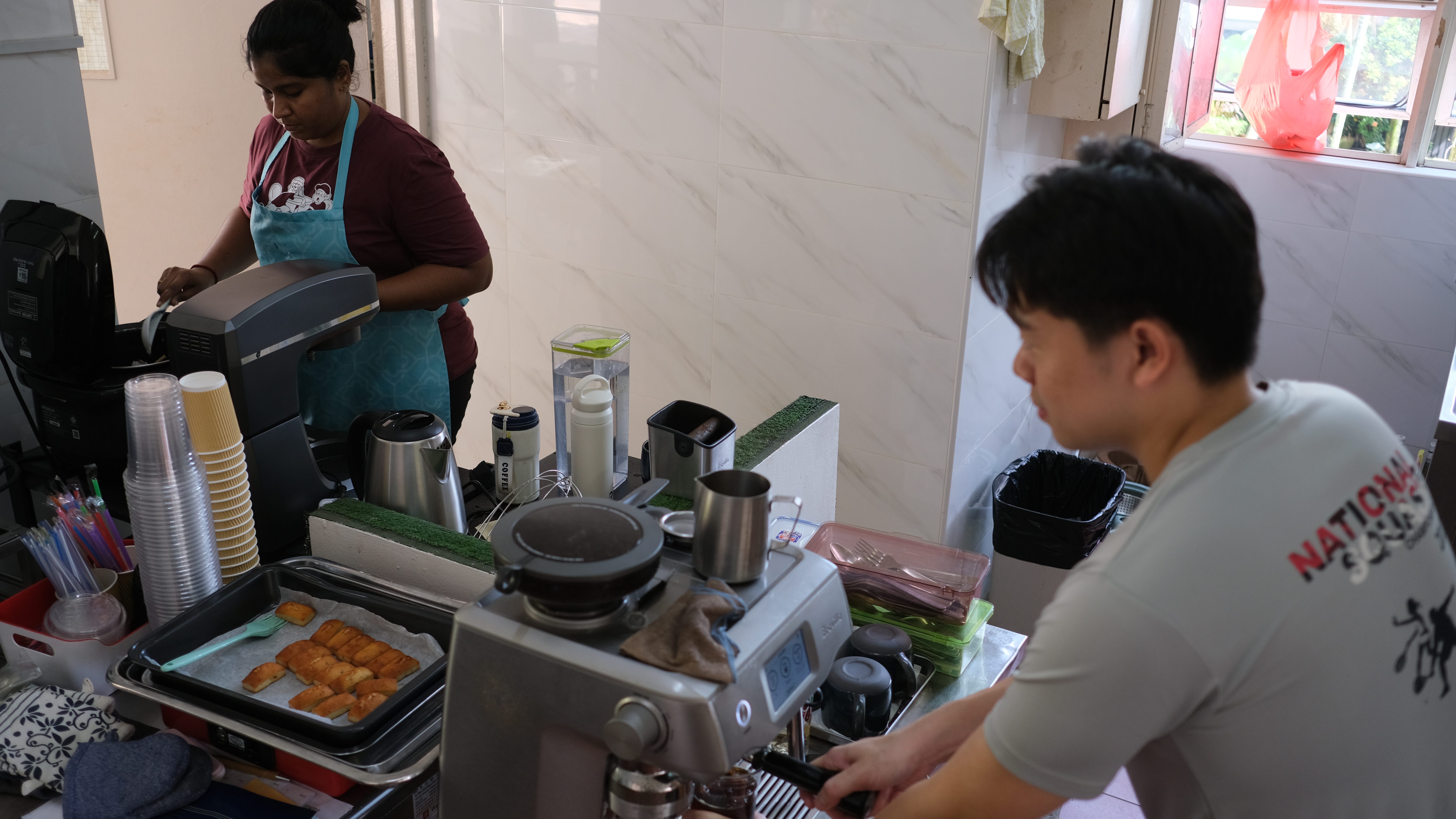
What Ramsay gave him was more than inspiration. It was a proof of concept: here was someone who had earned three Michelin stars and built a global restaurant empire simultaneously. The possibility that you could pursue the craft at the highest level and still build something commercially serious wasn’t something the conventional path offered him. “It showed you what success could look like,” he says. “Something so different from what was available to me before.”
He went into National Service carrying cookbooks, three or four at a time, stuffed into his bag every time he booked in. He was known for it in the bunk. On duty, when there was time, he read them.
After NS, the decision sharpened quickly. Culinary school cost S$7,500 after subsidy, against five figures for a university degree. The comparison sat with him in a practical way: if he tried it and it was wrong, he could just leave after one term.
His course internship landed him at La Brasserie at Fullerton Bay, one of Singapore’s foremost steak restaurants, and the gap between cooking at home and cooking in a professional kitchen became real to him in a way it hadn’t been before. There, he learned what pace actually meant in a commercial setting.
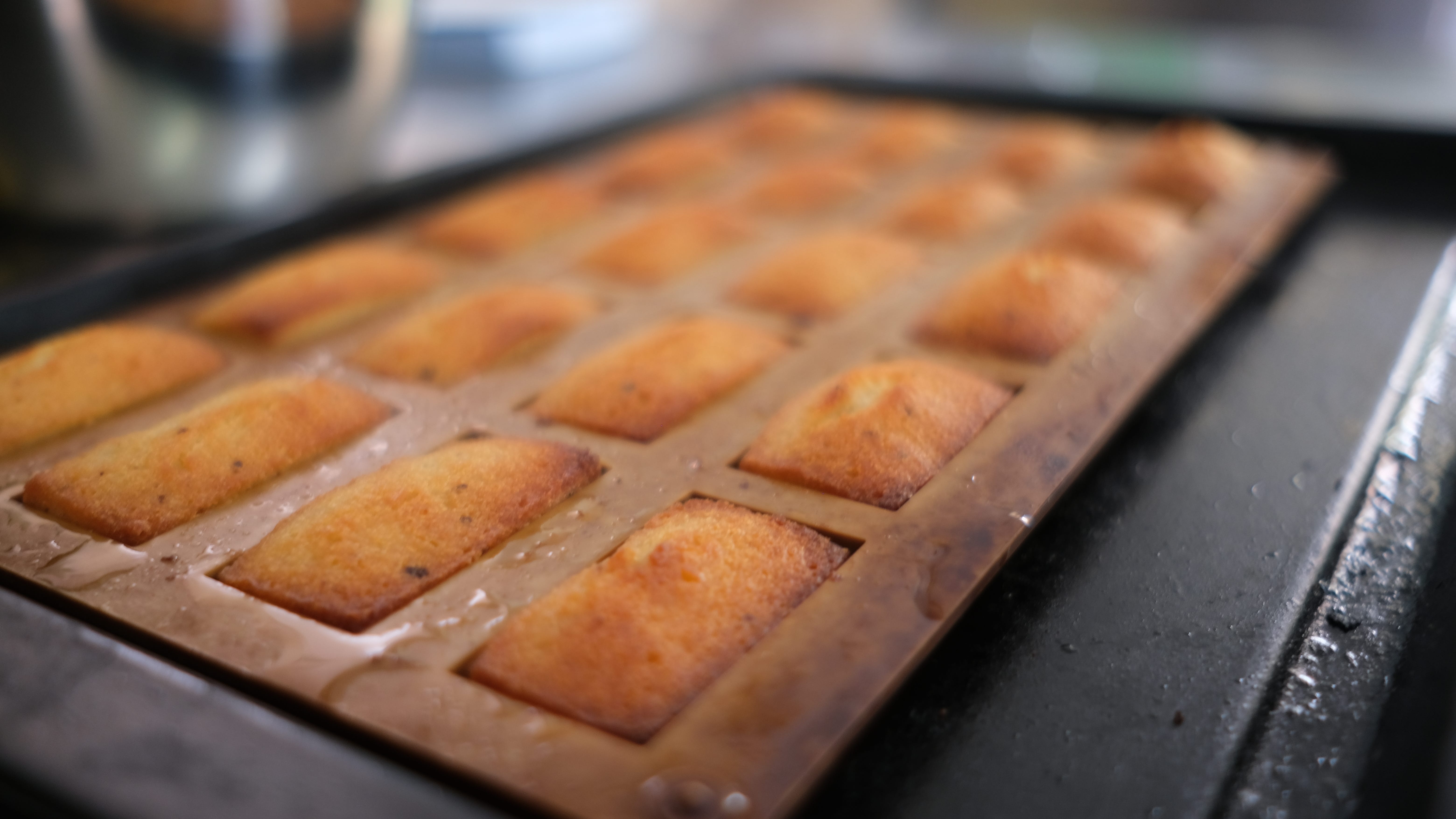
While still in culinary school, home-based business regulations restricted him to pastries only. He considered cookies, then settled on madeleines, which he judged to be more scalable, more distinctive, and better in presentation. He baked batches, gave them away, gathered feedback, and then decided he needed a customer base beyond his immediate circle. So he walked into the residential college common rooms at NUS with a tray of samples and started offering them to strangers, knocking on meeting room doors, approaching people at tables, absorbing the roughly one-in-five interactions that went badly and pushing through to the next.
The move netted him over a hundred followers in three days. No marketing plans, just straigt-up door-to-door with many a madeleine to share.
Bangkok
Opening Mervyn’s Madeleines gave him something he had been building toward for years. It also revealed a significant blind spot that took time and a tough lesson to fully understand.
The first two years were driven almost entirely by research and development. New dishes appeared constantly, and the menu evolved according to his curiosity as much as anything else. He also expended most of his energy on the craft of the food rather than the mechanics of the business. Consequently, items that spread inventory thin and did not justify their margins stayed on longer than they should have. “I was overly chef-driven,” he says now. “I think I limited my own growth because of it.” He was not running a failing restaurant, but the gap between loving what he was doing and building something that could scale was wider than he had understood.
In 2023, he took that gap with him to Bangkok, where he opened a western restaurant of his own. It ran for eight months. The market proved harder to read than expected, a second location never materialised, and by end October he had decided to cut his losses and return to Singapore.
When he came back, the order of priorities had shifted. He did his projections properly. He focused on marketing in a way he had not before. He removed items from the menu that spread inventory too thin and assessed dishes for operational efficiency alongside taste. The chef-brain didn’t go anywhere, he is clear about that, but it needed to run first, to exhaust itself in the early years on iteration and refinement, before the business discipline could be built around what remained. “I got it out of my system,” he says. “Now I have enough dishes I’m happy with. The focus is on growing it properly.”
What comes next
The squid linguine has been on the menu since the beginning, one of the first four dishes he ever served. He encountered the dish first on YouTube, then tasted a version at Jamie’s Italian, and over the six years since it has been revised multiple times.
Mervyn still considers it his favourite dish on the menu, and the reason he gives is not simply that it tastes good. It’s the dish that’s moved with him through every phase of the business, from the early R&D years to the tighter, more disciplined operation that exists now.
His family’s position has also shifted alongside the business. His father, once quietly doubtful, is more assured. His mother helps with the accounting, covers the blind spots he still carries, and he is grateful for it in the way you are grateful for something that held when everything else was uncertain.
Next up is MM Diner, a second outlet at 5A Ridgewood Close modelled after American diners, for which there is already a waiting list.
For Mervyn. the path laid out for him ran in a completely different direction. But somewhere between the cookbooks in the NS bunk and the madeleine trays at NUS and the tough lesson of the first two years, he worked out what he was actually doing here. The craft and the business aren’t always comfortable together, but they’re not opposites either. He just knows now what order to run them in.
So cool! I'm always so enthralled by the stories from different singaporeans! :D