

House Rules: Dominic Yu on setting up Japanese restaurants in Singapore (Part 1 of 3)
The first edition of Commune's latest series covers the capital, the sourcing, the manpower, and the mistakes that close Japanese concepts before they find their footing.


📌 House Rules invites F&B veterans to share actionable tips and tricks of the trade, and reveal what really goes on behind the scenes. Dominic Yu has spent 15 years working across front and back-of-house operations in F&B, with a specialisation in Japanese dining concepts. He has successfully launched more than six F&B ventures to date, and currently runs LaunchLabs Kitchen helping operators navigate the structural and operational realities of building in one of Asia’s most competitive dining markets.
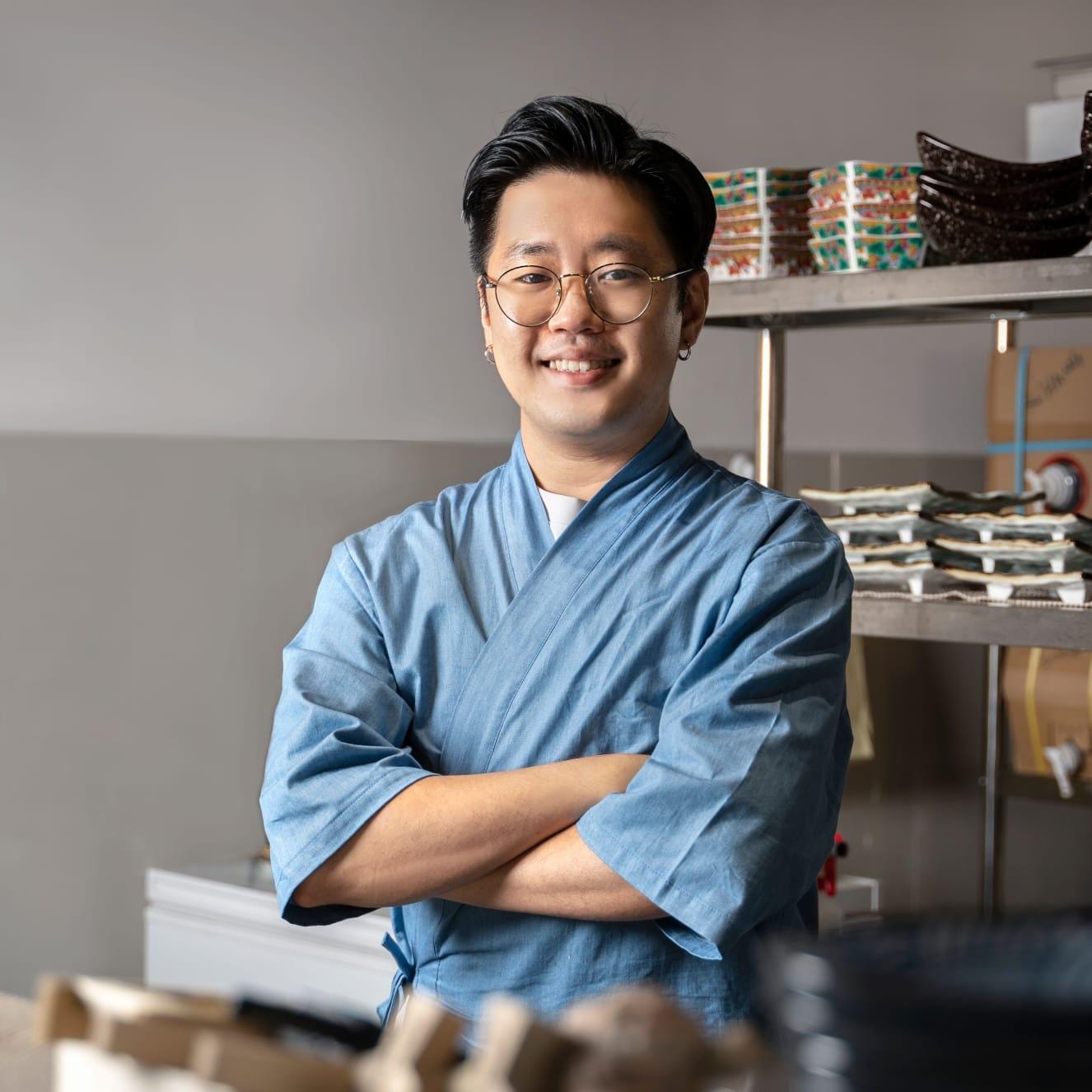
In our inaugural edition of House Rules, we sit down with him for a three-part series on designing and scaling Japanese F&B concepts in Singapore. In part one, Dominic shares some of the hidden pitfalls that operators commonly overlook.
Q1: How different are the capital and operating requirements between a family diner, an izakaya, and a fine dining Japanese restaurant?
Capital requirements vary significantly depending on the concept. For an izakaya, setup costs are typically the lowest, usually ranging from $200,000 to $500,000 depending on renovation, kitchen equipment, and location. The more successful izakayas tend to focus primarily on guest relations and the overall drinking and dining experience, which means minimal decor is required, and many of the older establishments still use chalkboard menus.
A family diner concept usually requires more capital. These restaurants are typically larger, carry bigger menus, and need more kitchen equipment, with setup costs generally starting at $500,000 and above. There’s a growing range of machinery that enables kitchen automation across both hot and cold functions, from gyoza steam-and-sear machines and timed ramen noodle cookers to sushi rice ball makers and rice mixers. This equipment isn’t cheap, ranging anywhere from $5,000 to tens of thousands per unit, but it meaningfully reduces labour costs and standardises quality across outlets. Some international brands actively prioritise maximising automation wherever possible.
Fine dining Japanese restaurants sit in a different category altogether. With premium ingredients, specialised equipment, interior design, and highly skilled manpower, setup costs can easily run into the millions. Minimalist art pieces, hinoki wood tables, and chinaware priced at thousands per piece are standard at this level. Some restaurants go further still.
One thing many investors underestimate is that setup cost is only the start. Owners should be financially prepared to absorb losses for at least a year, particularly if the restaurant takes time to build a stable customer base. The prudent approach is to have sufficient funds to cover at least six to twelve months of lease payments, total forecasted labour costs, ingredient spend, and any recurring service or equipment fees - before the first customer walks in.
When sourcing a unit, operators occasionally come across spaces available for takeover, where both parties agree on what transfers and at what price. Assignors typically want to sell the business as a whole, including the brand. The incoming party should go in with clear eyes about any existing issues and make a deliberate call on what they’re prepared to absorb: the remaining lease, usable equipment, fittings and fixtures, and existing software such as POS and CRM systems are the usual items on the table. A good takeover is rare, but there are cases where a new operator with stronger capital has picked up a well-structured business that simply ran out of runway, and returned it to profitability within a few months.
Q2: How does ingredient sourcing differ across these restaurant tiers?
Ingredient sourcing varies considerably depending on the level of the restaurant. Fine dining operations typically require the best seasonal produce available, often sourced directly from Japan or through specialist suppliers. A head chef opening their own place would usually arrive with an established supplier network built over years in the industry.
Family diners and izakayas take a more balanced approach, targeting the best achievable ratio of cost to quality rather than absolute standards. Dashi illustrates this well. It’s one of the foundational stocks in Japanese cuisine, and how a kitchen makes it tends to reflect where it sits in the market. In a fine dining restaurant, dashi is typically prepared from scratch using kombu and bonito flakes. An izakaya might use a high-quality dashi pouch, which delivers a meaningful step up from basic instant powders while remaining practical for a busy service environment. Family diners commonly rely on hondashi powder or shirodashi concentrate, which is both efficient and consistent at the volumes a high-cover kitchen demands. The approach at each tier isn’t arbitrary — it’s calibrated to what the operational reality actually requires.
Q3: How does manpower planning differ across these restaurant concepts?
Manpower structure varies significantly depending on the concept. For family diners, scalability and consistency are the overriding priorities. The menu and operations need to be designed for reliable replication across future outlets, and kitchen automation plays a supporting role in making that achievable.
For a 50-seater family diner, a typical team might include a head chef, a sous chef, a restaurant manager, an assistant manager, and between one and three kitchen and front-of-house staff respectively. Since family diners are built around operational efficiency rather than luxury service, QR-code self-ordering systems are commonly used to reduce front-of-house headcount.
Izakayas tend to run leaner. A 25-seater might operate with just a manager, a head chef, and one or two dual-role staff who handle billing, drinks preparation, food service, and occasionally dishwashing within a single shift.
Fine dining manpower depends heavily on the specific concept. A chef-led sushi restaurant like Sushi Sato might run with the main chef, two front-of-house staff, and one or two kitchen assistants. The limitation of this model is that the concept is built around a specific individual rather than a replicable system. You can expand a family diner format across locations. You can’t open a second Sushi Sato without Chef Sato.
Q4: What financial mistakes do new restaurant owners often make?
The most common mistake is underestimating the capital required, and proceeding anyway with the expectation that strong sales will eventually make up the difference. One case illustrates what happens when that logic fails. The director behind a Build-Your-Own-Bowl concept had exhausted most of his available capital during the setup phase, and within three months of opening, the business had run out of funds to continue.
At that point, the options had narrowed to three: take on additional loans and keep operating, find a buyer to take over, or cease operations immediately and liquidate at a loss. The third was chosen. What followed wasn’t a clean exit. The lease was terminated under a writ of possession requiring the premises to be vacated within two days. Software and equipment subscriptions were cancelled with associated penalties. Storage had to be arranged for assets that couldn’t be liquidated in time. Equipment was sold at heavily discounted prices under time pressure. Staff and service providers still had to be paid through notice periods or compensated via early termination fees. What began as a capital shortfall became a cascading set of costly and time-sensitive problems.
Poor fund allocation is a related and equally common issue. Experienced operators tend to be disciplined about spend even on expensive projects, opting for second-hand kitchen equipment when it makes financial sense. Many work with suppliers that carry both new and refurbished stock alongside custom stainless steel fabrication - companies like A&C Technologies, for instance - which allows them to balance cost and quality without giving up too much on either. Some operators also source through Facebook or Telegram F&B groups, where closing restaurants offload equipment at significant discounts, with costs reduced further when buying in bulk. The contrast with first-time owners is consistent: new operators frequently favour brand-new equipment because it looks impressive. That difference in mindset often marks the line between a seasoned operator and someone who hasn’t done this before.
Menu planning is another area where the calculation is more involved than it appears. A common shortcut is to multiply ingredient cost by four to target a 25% COGS figure, but true food cost also has to account for ingredient wastage, disposables like packaging and cutlery, electricity and water consumption, and actual yield after cooking. Each factor seems small in isolation. Left untracked, they accumulate and compound over time.
Q5: What early warning signs should investors watch for before committing to a restaurant?
There are a few practical benchmarks operators use to test feasibility before committing. Rent should ideally stay within 15 to 20% of projected revenue. Labour cost typically sits at around 20 to 25% depending on the concept. Food cost should fall within 25 to 30%, adjusted for the restaurant’s positioning. If any of these figures don’t hold up from the start, the concept is already under pressure before a single cover has been served.
Site vetting is one of the most important steps in the process, and it requires a clear alignment between three things: the concept, the target audience, and the selling price. A misalignment in any one of them creates problems. Opening a pork-focused restaurant in a predominantly Muslim area is an obvious case of concept-audience mismatch. But the errors are often subtler than that.
Japanese concepts carry additional considerations. Customers tend to be more attuned to quality, sourcing, and execution than with many other cuisines, and expectations sit higher as a result. A sushi omakase placed in a location without strong dining culture or sufficient disposable income carries significantly more risk than the same concept elsewhere, because the model depends on trust, repeat patronage, and a genuine appreciation for the craft. Casual Japanese formats like ramen or donburi are more accessible but face heavier competition and sharper pricing pressure.
Price-location fit matters even when the concept and audience are otherwise aligned. A restaurant charging $100 per person in a heartland mall might draw curious first-timers, but the return rate will be low. And when a particular concept type has repeatedly opened and closed in the same location, that track record should be taken seriously. Landlords sometimes offer attractive rental terms to diversify their tenant mix, but if a specific category has failed several times in the same space, it’s usually safer to treat that pattern as a signal rather than an opportunity.
Launching or running an F&B business? Launchlabs Kitchens provides full-service or modular F&B venture services - conceptualisation, menu R&D, visual content, media outreach and more - for F&B operators across all stages. Reach out to Dominic at launchlabkitchens@gmail.com.