

House Rules: Dominic Yu on setting up Japanese restaurants in Singapore (Part 2 of 3)
The second instalment covers menu architecture, supply chain tiers, and the mistakes that quietly erode margin before the kitchen finds its rhythm.


📌 House Rules invites F&B veterans to share actionable tips and tricks of the trade, and reveal what really goes on behind the scenes. Dominic Yu has spent 15 years working across front and back-of-house operations in F&B, with a specialisation in Japanese dining concepts. He has successfully launched more than six F&B ventures to date, and currently runs LaunchLabs Kitchen helping operators navigate the structural and operational realities of building in one of Asia’s most competitive dining markets.
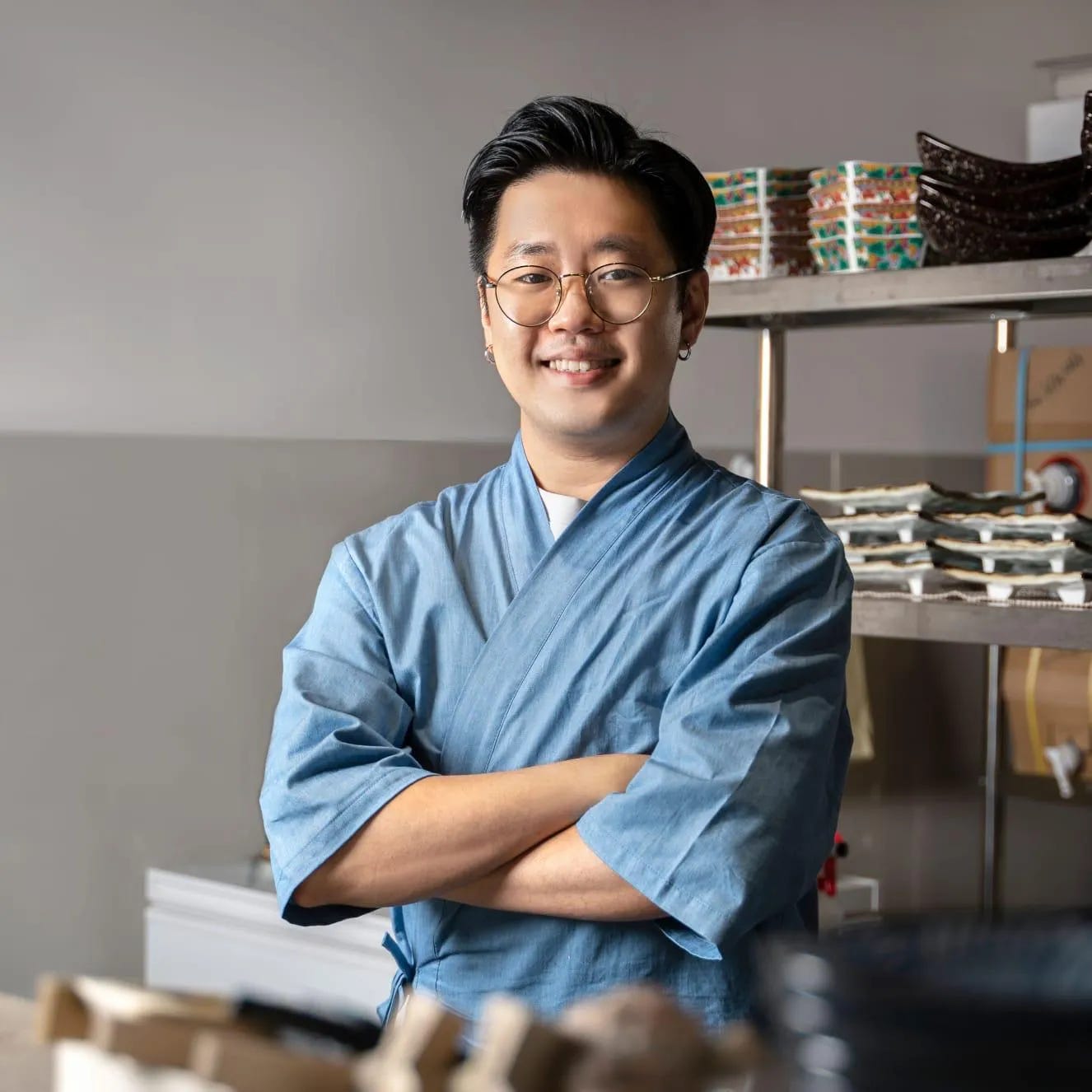
In the second instalment of our three-part House Rules series, Dominic moves from the structural realities of setting up a Japanese concept to the menu decisions that determine whether it stays profitable.
Q1: How should menu design differ between a family diner, an izakaya, and a fine dining Japanese restaurant?
Menu structure is planned differently depending on the concept, and the logic behind each approach is tied directly to how customers behave in that setting.
At the fine dining level, guests come expecting dishes that feel considered and often singular, which means the kitchen’s job is to deliver that through sequencing: lighter dishes at the start, richer items through the middle, a clean finish at the end. Every dish has to earn its position in that sequence, with each course contributing to the overall arc of the meal rather than existing independently of it. With that kind of structure in place, a wide menu would undermine rather than support the experience, so the focus tends to be on a curated set of dishes executed with precision.
For izakayas, the composition logic is structured around how people drink and eat over an extended session. Around 60 to 70% of the menu should be small plates, skewers, and bar bites designed to pair well with alcohol, with guests moving between light, salty, grilled, and fried items in a rhythm that keeps them ordering across the evening. Heavier or more filling dishes should sit at around 10 to 20% of what’s on offer, since filling customers up too quickly works against the kind of long, drink-driven visit that makes an izakaya’s numbers work. The remaining 10 to 20% can rotate seasonally or carry more distinctive items, which gives regulars a reason to come back.
Family diners are built around familiarity and repeatability, with around 50 to 60% of the menu made up of approachable staples — donburi, ramen, curry rice, set meals — that customers can order without much deliberation and return to regularly. Sharing plates, sides, and add-ons can account for another 20 to 30%, which is where average spend gets lifted without significantly increasing kitchen complexity. A smaller seasonal rotation fills out the rest, keeping the menu from feeling stale without overcomplicating operations.
Q2: How do ingredient tiers change depending on the restaurant level?
Japanese cuisine places strong emphasis on seasonal ingredients, and the supply chain has evolved to support different tiers of restaurant in ways that aren’t always visible to the operator.
Take Pacific saury during autumn. A fine dining kitchen will typically want the fish fresh and whole, and the reason is less about freshness in the conventional sense and more about what the kitchen can do with it once it arrives. When a chef fabricates the fish in-house, they retain control over how it’s broken down, which parts to age, and which to apply different techniques to during preparation — the ingredient functions as a starting point, and that flexibility is central to how fine dining menus are built around seasonal produce. For izakayas and family diners, suppliers often carry pre-grilled frozen versions of the same fish, which allows those kitchens to serve seasonal dishes without the complexity of handling fresh fish at volume.
This tiering runs through most of the seasonal supply chain. The same item reaches different operators in different forms, at different price points and preparation states, which means a restaurant doesn’t need to be operating at the fine dining level to access seasonal ingredients, but it does need to understand which form of those ingredients makes sense for what it’s actually building.
Q3: How do you balance authenticity with practicality when designing menus in Singapore?
The assumption that Japanese cuisine is rigid about authenticity is a bit of a misread. Within Japan, the cuisine has always absorbed external influences, with dishes like mapo tofu, hamburg steak with potato wedges, and Napolitan pasta sitting comfortably alongside more traditional preparations. As long as the food is well-executed and coherent with the concept, fusion tends to work.
On technique, the same flexibility applies. Making dashi or tonkotsu broth from scratch is the traditional approach, but using a high-quality dashi pouch or a concentrate is a calibration to operational reality rather than a departure from it, and fast food chains in Japan rely on exactly these shortcuts because they’re practical and consistent. Some higher-end restaurants do too, for components that aren’t central to the dish. The more relevant question isn’t whether a shortcut was taken, but whether it affected the thing that actually matters in that particular preparation.
Q4: What menu mistakes hurt restaurants the most?
One of the most damaging is having too large a menu. A wide offering increases kitchen workload, complicates inventory management, and raises the risk of ingredient wastage when slower dishes don’t move. That said, certain items can’t be left off without the concept feeling incomplete — in a Singapore izakaya, grilled stingray fin is close to mandatory, and its absence registers as a gap to customers who know the format.
The other issue Dominic flags consistently is operators trying too hard to be distinctive. A grilled stingray fin served with a straightforward mayonnaise dip works well as a dish. The temptation to upgrade it — to build a smoked mentaiko mayonnaise, or to garnish it more elaborately — introduces preparation complexity that may not improve the result, and can narrow the dish’s appeal among customers who dislike mayonnaise entirely. Over-garnishing creates a similar problem at scale: stacking edible flowers across multiple dishes might look considered in isolation, but when every plate comes out the same way, the visual language stops communicating anything, and food cost climbs without a corresponding lift in the experience.
Q5: How do you optimise a menu to remain profitable?
A useful starting point is studying how direct competitors structure and price similar dishes. Pricing patterns within a category often represent years of market-level optimisation, and an operator who reads those patterns carefully can absorb that accumulated learning without repeating the same trial and error. This isn’t about copying a menu — it’s about using the competitive environment as a calibration point before committing to a structure.
On the supplier side, there’s no single best option, and experienced operators tend not to approach it that way. What matters is finding suppliers whose product range, reliability, and working terms fit what the concept actually needs, and the relationships that deliver those terms are typically built over years in the industry rather than found through a straightforward evaluation process. New operators generally receive higher initial quotes, but referrals or existing connections can improve those terms faster than building from scratch, and a supplier who already understands the kitchen’s requirements and can cover a broad range of its needs is often more valuable than a marginally cheaper alternative who can’t.
On pricing, maintaining food cost within 20 to 30% is a useful benchmark, but the calculation has to account honestly for ingredient wastage, disposables, electricity and water consumption, and actual post-cooking yield — factors that a simple cost multiplier doesn’t capture. A dish also shouldn’t be priced significantly higher than others in the same category just because its ingredient cost is low; consistency across the menu builds customer trust in a way that opportunistic outliers tend to undermine.
Launching or running an F&B business? LaunchLabs Kitchen provides full-service or modular F&B venture services — conceptualisation, menu R&D, visual content, media outreach, and more — for operators across all stages. Reach out to Dominic at launchlabkitchens@gmail.com.