
Your customers aren’t yours
Ghost kitchens promised Singapore’s F&B operators a smarter deal. The data always told a different story.

Somewhere in the S9 building in Serangoon North, a kitchen is running. Orders come through on a tablet with GrabFood, Foodpanda, and Deliveroo stacked in one dashboard. The operator cooks, packs, hands off to a rider. Another ticket prints.
The operator can’t tell you whether the person who just ordered has ordered before. They can’t tell you whether this customer has been ordering every Thursday for three months, or whether they tried the listing once after a promotion surfaced it. There’s no way to know.
The kitchen is run out of Smart City Kitchens, Singapore’s largest independent cloud kitchen operator. The operators there list across GrabFood, Foodpanda, and Deliveroo simultaneously, and all orders flow into one dashboard. They aren’t locked into a single platform’s infrastructure, the way merchants inside GrabKitchen or Deliveroo Editions were.
They still don’t know their customers.
The pitch
When GrabFood launched Singapore’s first GrabKitchen in Hillview in January 2020, Grab had already mapped the demand before inviting a single merchant in. In-app usage data showed that residents in Northwest Singapore were searching for bubble tea, mala, and Japanese food in far greater numbers than merchants were supplying.
Sai Alluri, then regional head of GrabKitchen, explained the approach in a DealStreetAsia interview: “We leverage customer insights derived from the Grab app across multiple verticals, as well as market research. This helps to identify locations with pent-up demand for cuisines and brands that are less accessible to consumers in an area.”
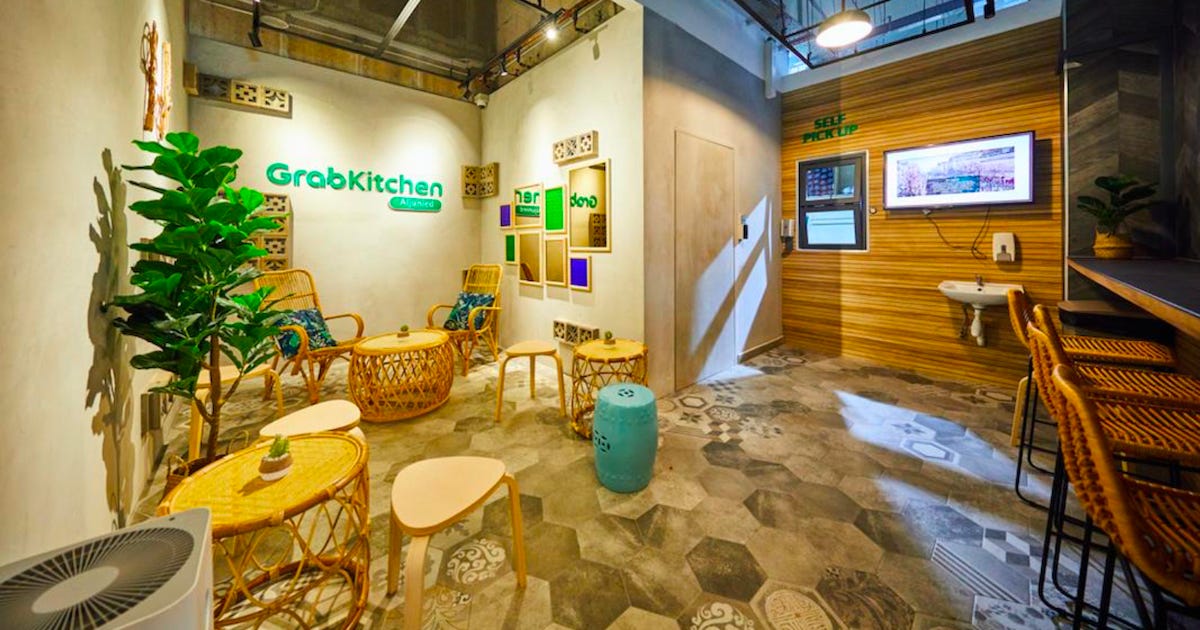
The second GrabKitchen, in Aljunied, was selected the same way. Grab’s in-app data had identified Japanese, Korean, and Western cuisines as having significantly higher consumer demand than merchant supply in the area.
Merchants who joined found the offer compelling. Fong Chak Ka, Vice-President of PUTIEN, reflected on joining GrabKitchen Aljunied in 2020: “While the cloud kitchen concept is very new to us, we can already see some benefits, such as managing lower overhead costs and having access to insights to what consumers expect from food delivery.”
What PUTIEN received, along with every other merchant inside GrabKitchen, was aggregate intelligence about the broader market. The data about their own customers stayed with Grab.
What the platform keeps
When a GrabFood order comes through, the operator sees a name, a delivery address, and the items ordered.
Grab retains the customer’s full order history across every merchant on the platform. Their neighbourhood. Their ordering frequency, average spend, and cuisine preferences over time. Whether they stopped ordering after a period of regular purchases, or whether a promotion brought them back. All of it accumulates with every order placed on any kitchen in the network.
That’s the same data Grab used to identify the demand gaps in Hillview and Aljunied. Every order a merchant processes adds to it. The merchant contributes to the picture and sees none of it.
Christine Li, then head of business development services at Cushman and Wakefield Singapore, described the situation in a 2021 EdgeProp article on Singapore’s cloud kitchen sector: “The virtual platforms take a substantial cut of the order as commission, reducing profitability. They are the new landlords in the digital age.”
A property landlord charges rent and controls the space. A platform charges commission and controls the customer relationship. Many operators who entered ghost kitchens to reduce their exposure to physical landlords found themselves taking on a different kind of exposure instead.
The first fight
The structural tension between delivery platforms and independent kitchen operators became visible early.
When Smart City Kitchens opened its first facility at the JTC Space in Tampines North in mid-2019, positioning itself as Singapore’s only cloud kitchen operator unaffiliated with any delivery platform, Deliveroo and GrabFood refused to list its tenants.
Shubham Gupta, co-founder of Biryani Box, had been in discussions with Deliveroo before moving into Smart City Kitchens. When the SCK facility launched, Deliveroo pulled out. “Deliveroo was initially working with us to set up, but when I called them, they said they will be pausing because they are not working with Smart City Kitchens,” Gupta told the Straits Times. He said being shut out of a percentage of the food delivery market “would really make it a challenge.”
Raj Group of Restaurants, which already had four outlets listed on Deliveroo, was told it wouldn’t be added to the platform from its new SCK unit, days before the facility launched. The Competition and Consumer Commission of Singapore opened an investigation. The blockade was eventually lifted.
Choosing Smart City Kitchens gave operators independence from any single platform’s kitchen infrastructure. Orders still flowed through GrabFood, Foodpanda, and Deliveroo, but the customer data stayed with the platforms.
A re-acquisition trap
GrabFood and Foodpanda charge between 25 and 35 percent commission per order. Analysis of the ghost kitchen sector has put the annual revenue needed to break even - accounting for delivery app fees, kitchen rent, and marketing - at around $650,000.
Each time a customer orders from a ghost kitchen brand, the platform charges commission. When the same customer orders again, the platform charges commission again. If the customer stops ordering and a platform promotion later brings them back, the operator pays again for a customer whose departure they never detected, because there wasn’t a way to detect it.
There’s no notification when a regular stops ordering. There is no direct channel to reach them. The customer’s ordering history with a brand lives inside the platform’s systems, and the operator sees only the orders that come in.
Restaurants with physical premises have other ways to maintain customer relationships: walk-in traffic, regulars who recognise the staff, packaging with a contact number. A ghost kitchen brand that operates entirely within a delivery app has none of these. When the platform deprioritises the listing, order volume drops without any signal to the operator about why.
The scoreboard
According to a 2024 CNA report, the number of ghost kitchen facilities in Singapore fell from 18 at the 2021 peak to 11. Deliveroo closed its last two dark kitchen sites in Singapore in September 2024, citing rising operational costs and reduced demand from restaurant partners. On 25 February 2026, DoorDash announced it was winding down Deliveroo’s Singapore operations. The service ended on 4 March.
GrabKitchen shut down its Indonesia operations in December 2022, citing “inconsistent growth and a shift to an asset-light business model.” The Singapore facilities were never expanded beyond two sites.
In each case, the platforms exited the kitchen business while retaining the order data collected while running it. The years of transaction history from across the network - what customers ordered, how often, from which neighbourhoods, at which price points - remained with the platforms.
What operators are doing
Operators running ghost kitchens or shared kitchen facilities have been responding to the data gap in different ways.
Some have built direct customer channels alongside their platform presence: WhatsApp Business accounts, QR codes in packaging linking to a direct ordering page, small incentives for customers who order off-platform. The order volumes through these channels are modest compared to GrabFood or Foodpanda, but the customers reached this way are ones the operator has direct access to.
Others have prioritised listing across multiple platforms simultaneously. Running across GrabFood, Foodpanda, and Deliveroo, as Smart City Kitchens operators do, means no single platform controls the entire customer relationship. It doesn’t change what data the operator holds, but it reduces dependence on any one platform’s algorithm.
A smaller group has added physical touchpoints: a hawker stall, a pickup counter. These create customer interactions that do not pass through a platform.
Oddle, the Singapore-based online ordering platform, charges merchants 10% commission - roughly a third of what the major delivery apps charge - and routes full customer data to the restaurant after each transaction. “When a customer transacts through Oddle, the data is shared with the restaurant and they have full ownership of it,” co-founder Jonathan Lim has said. Swiss Rosti Corner by Marche Movenpick, operating out of Smart City Kitchens Tampines, lists on Oddle alongside Foodpanda. Oddle’s user base is far smaller than GrabFood’s, so it functions less as a discovery channel and more as a way to retain customers already found through the major platforms.
None of these approaches gives operators the same depth of customer data that the delivery platforms hold. The platforms have been building these profiles since 2018 or earlier, across every kitchen and every merchant on the network. What operators can do is ensure that some portion of their customer interactions stays with them.
Ghost kitchens reduced the cost of entering Singapore’s F&B market. Operators could test a concept in a new neighbourhood without a full renovation, carry lower rent, and run a leaner team. Many built real businesses on the model.
Every order that came in through GrabFood or Foodpanda gave the platform more information about the customer and gave the operator an address and a ticket to cook. Over time, the platform’s picture of what each customer likes, how often they order, and what brings them back became more detailed. The operator’s impression stayed roughly the same.
The platforms have started winding down the kitchen side of the business. The data side isn’t going anywhere.